By Nancy Patrick | KBI Digital
Before I got into analytics, I was an applications manager. It was my first management role, and I found out pretty quickly that I was micromanaging. I knew the work, and when I saw something I could fix or do faster myself, I jumped in. I had to learn how to delegate, which meant getting clear about what I expected, deciding when to check in, and giving people room to do the work their way.
Over 25 years in data and analytics, including over a decade of leading teams, I’ve also worked for good managers, so-so managers, bad managers, and a few whose behavior got downright ugly. I learned from all of them. Some showed me what it feels like to have a manager back you up when a decision gets tough. Others showed me what happens when people get second-guessed, left to guess what’s expected, or asked to do more every week without anything coming off their plate. Those experiences helped me decide which habits I wanted to carry into my own leadership and which ones I needed to watch for in myself.
Picture this. It’s Thursday afternoon, and the dashboard your team promised for Friday still has numbers that don’t tie out. One manager pulls up a chair and takes over. Another asks for updates every hour. A third says, “I trust you to figure it out,” and heads to their next meeting.
Which response would you want? It depends on what’s holding you up. Do you need someone to make a decision? Do you need help finding the error? Or do you need your manager to tell the stakeholder that Friday is no longer realistic?
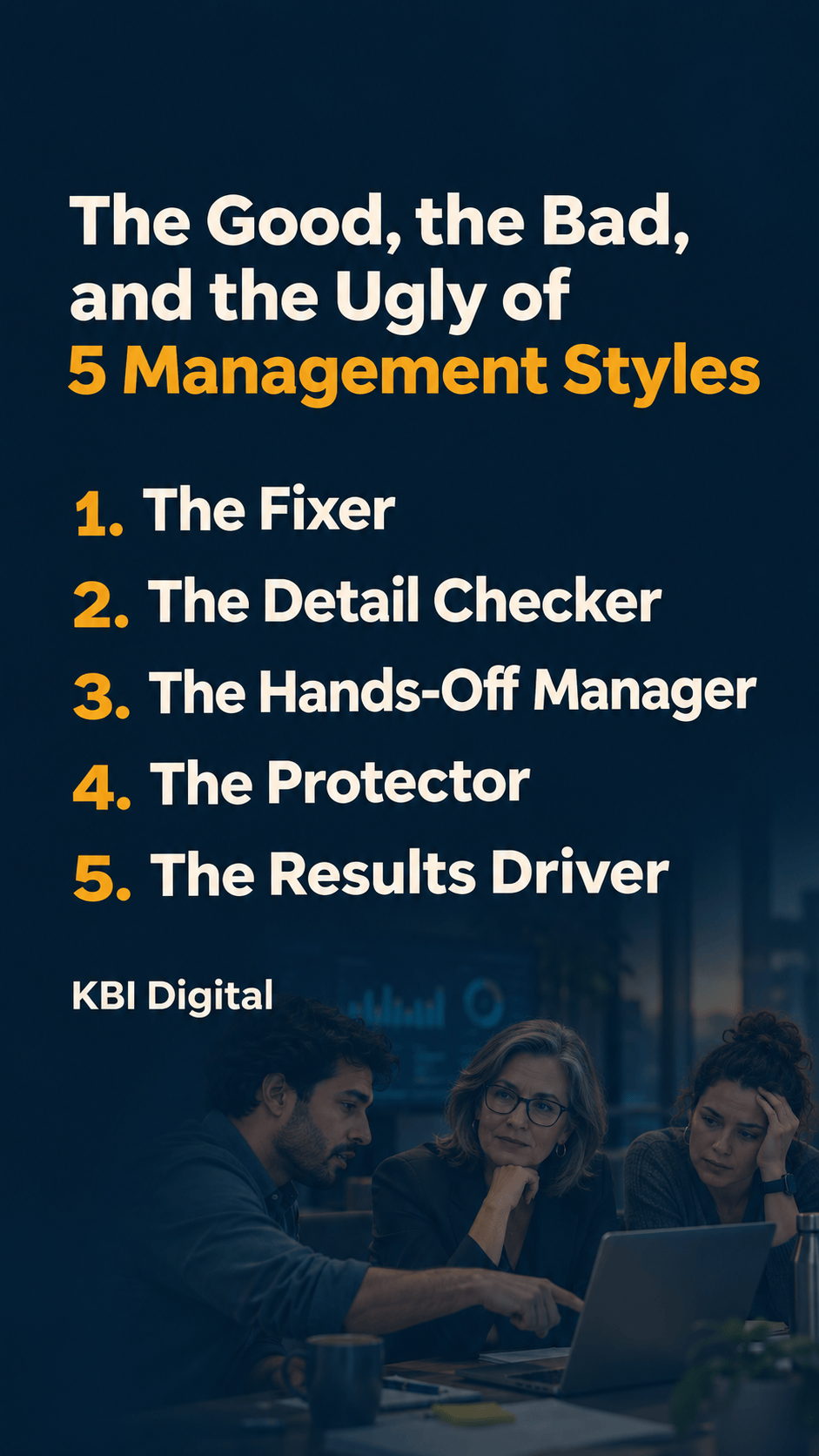
Most of us have a response we fall back on when the pressure is on. Each of these five styles has something worth borrowing. The trouble starts when the same response becomes your answer to every problem.
1. The Fixer
The good. When something breaks and the team needs help, the Fixer rolls up their sleeves. Sometimes the fastest way through a problem is to sit down together and work it out.
The bad. The Fixer jumps in before finding out what kind of help the employee needs. Someone asks for a second set of eyes and leaves the conversation without the assignment they walked in with.
The ugly. The manager becomes the person every difficult problem has to go through. Employees learn to hand over the hard parts, and the manager wonders why nobody takes ownership.
Try this. Before you take over, ask, “Where are you stuck, and what do you need from me?” You might need to make one decision so they can finish the job.
2. The Detail Checker
The good. The Detail Checker catches the wrong filter on a dashboard or the number that doesn’t match what Finance reported. Their attention to detail can save the team from sending out something it will have to correct later.
The bad. The same level of review starts to apply to routine work. An employee who’s delivered the same report every Monday for six months still has to wait for a thumbs-up before sending it.
The ugly. Work piles up whenever the manager is out. People start asking for approval on decisions they already know how to make because guessing what the boss wants takes longer than asking.
Try this. Agree on what needs your review and what the team can send on its own. A new metric headed to the executive team may need a second reviewer. A routine refresh can follow the team’s usual quality checks.
3. The Hands-Off Manager
The good. This manager gives people room to make decisions and own their work. The team can move quickly because everyone knows what they’re responsible for.
The bad. The manager assumes that because nobody has asked for help, everyone has what they need. The first real conversation about the work happens when it’s almost done.
The ugly. An employee delivers what they thought was expected and hears, “That’s not what I wanted.” By then, they’ve spent days building something they could have redirected after one short conversation.
Try this. Agree on what “done” looks like, when you’ll check in, and what would warrant reaching out sooner. Then give the employee room to work.
4. The Protector
The good. The Protector pushes back when three stakeholders all want their requests done first. They’re willing to have a hard conversation outside the team to keep the workload manageable inside it.
The bad. They put off hard conversations with their own employees. They quietly redistribute work to keep a deadline from slipping and hope the performance issue resolves itself.
The ugly. The same dependable people keep getting the extra work. Eventually, someone who used to volunteer says, “Why does this always end up with me?”
Try this. Address the missed commitment directly and ask what got in the way. Agree on what needs to happen next before asking someone else to pick up the work again.
5. The Results Driver
The good. The Results Driver helps the team see what matters most and gets decisions made when work is stalled. People know what they’re working toward and why it matters.
The bad. When a deadline is at risk, the first response is to ask everyone to push harder. The manager rarely asks what could move, what could come out of scope, or who’s already stretched thin.
The ugly. The team starts hiding delays or skipping checks because bringing bad news feels riskier than delivering work they haven’t had time to verify.
Try this. When someone says the team can’t finish everything by Friday, ask, “What can we deliver well by Friday, and what date can we commit to for the rest?” Then own that conversation with the stakeholder.
When the Ugly Becomes the Norm
Any of these styles can become toxic when harmful behavior becomes routine and people pay a price for speaking up. The Results Driver makes it easy to see how that can burn out a team.
Imagine the team makes the Friday deadline. Two people worked late three nights in a row. Someone caught a reporting error minutes before the dashboard went out. When an analyst said the workload was unsustainable, the manager questioned their commitment in front of the team. Leadership saw an on-time delivery. On Monday, the manager promised another rush turnaround because the team had “managed it last time.”
That last decision matters. The overtime that got the team through Friday is now part of how the manager plans Monday. And everyone who heard the analyst get called out has learned what it costs to say something.
If you manage that team, start with the promises you control. Move a deadline, narrow the scope, or pause lower-priority work. If you shut someone down for raising the issue, acknowledge it and follow up on what they told you. The team will be watching what comes off their plate and what happens the next time someone raises a concern.
Take the Good From Each Style
Learning to delegate as an applications manager taught me that I could still care about the details. I just had to get better at deciding which details needed my attention and which decisions the team could own. The same balance applies to the other styles. You can protect your team’s time and still have a direct conversation when someone misses a commitment. You can care about results and change the plan when the team tells you what the work actually takes.
In Manage the Work, Lead the People, I use four lenses to decide what a situation calls for. Go back to that Friday dashboard.
- Execution. Where is the work getting stuck?
- Direction. Have we agreed on what actually needs to ship Friday?
- Trust. Did people feel comfortable telling me on Tuesday that we were going to miss it?
- Capability. Does the person doing the work have the skills and support to finish it?
You might use the Results Driver’s focus to agree on what needs to ship, the Protector’s willingness to push back on what can wait, and the Detail Checker’s judgment to make sure the numbers that do go out are right. Then you can give the analyst room to finish the work. You can draw on several styles in the same afternoon based on what the work and the people need from you.
Think about the last time your team said they were overloaded or a project started to slip. Which style did you reach for first, and what could you borrow from another one next time?
For more ways to work through situations like these, look for Manage the Work, Lead the People on my Amazon author page.


Leave a Reply