By Nancy Patrick | KBI Digital
An employee discovers a mistake that could affect a deadline. Before coming to you, they pause. Will you help them work through it? Will you listen before making assumptions? Will they end up being blamed in front of the team?
What they do next may depend on what they have seen you do over the past several months. Your response to smaller problems has already taught them what to expect when something serious happens.
Trust is built during ordinary workweeks. By the time you need people to speak honestly, raise a risk, or work through an uncomfortable change, they need reasons to believe they can rely on you.
In my book, Manage the Work, Lead the People, Chapter 9 explores how daily management habits shape that confidence. People learn whether to trust you through repeated experience.
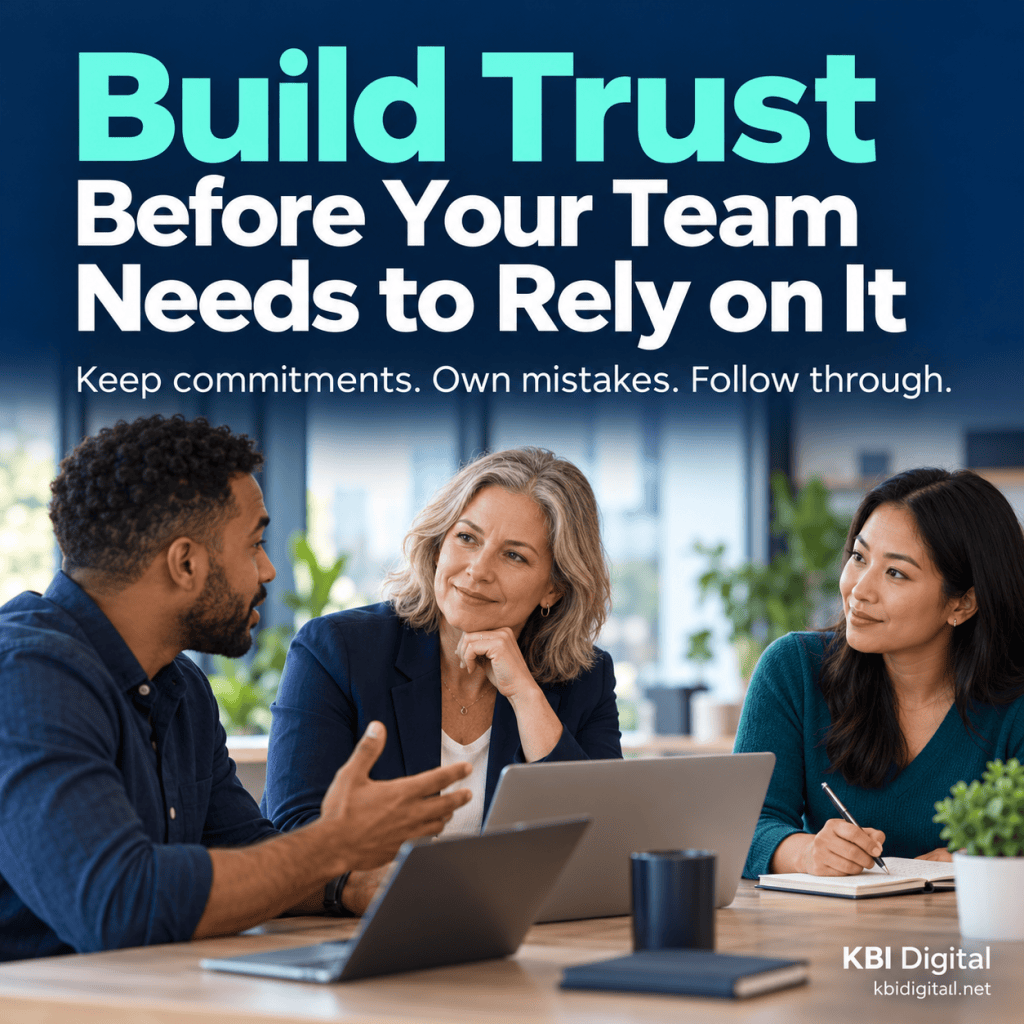
Three habits to start with
Keep small commitments and explain delays before people have to ask.
Respond to problems with curiosity and take responsibility for your part.
Support employees while making expectations and next steps clear.
Keep the small commitments
“I’ll check on that.” “We’ll talk about your development next week.” “I’ll get you an answer by Friday.”
These promises can feel minor when your calendar is full. To the employee waiting for an answer, they may be important. Perhaps they cannot move forward without a decision. Perhaps they finally worked up the nerve to ask about their future.
Write down the commitments you make to your team and give them the same attention you give project deadlines. If you cannot deliver when promised, explain the delay before the employee has to chase you.
An update can be simple: “I said I’d have an answer today. I’m still waiting for approval, and I’ll follow up with you on Tuesday even if the decision is still pending.”
You may not control the answer. You can control whether you close the loop.
Make it easier to bring you bad news
Saying “My door is always open” does little good if your reaction makes people regret walking through it. A sharp response or public lecture can teach employees to wait until they have a perfect explanation before raising a concern. By the time you hear about it, you have fewer options.
When someone reports a problem, start by understanding what happened and what is at risk. You might say, “Thank you for bringing this up. Walk me through what you know so far and what needs attention first.”
There may still be a performance conversation to have. You can address that after the immediate facts and impact are clear. Employees need to know that raising a concern early will lead to a fair response.
The book’s four lenses help you understand what a situation needs: execution covers how work gets done; direction clarifies purpose and priorities; trust makes honest conversations possible; and capability addresses skills and support. A missing update might reflect an unclear reporting expectation or a fear of admitting the work is slipping. Before adding another status report, find out what is getting in the way.
Be consistent enough that people know what to expect
Employees notice whether your response to a mistake depends on your mood, whether rules apply fairly, and whether you listen when someone disagrees. Those patterns tell them how safe it is to speak honestly.
Apply understandable standards and explain your decisions. Different employees may need different support, but the reasoning should be fair.
Under pressure, pay attention to your tone. Take a moment to gather your thoughts if needed so you can respond to the problem fairly.
Own your part when something goes wrong
Own the mistake, fix what you can, and improve the process.
In the book, I share an experience from early in my career when a deployment package from my team took down a business-critical application used by approximately 4,000 people. Our testing had missed the problem.
I focused on restoring service and communicating clearly. We corrected and tested the fix, worked with the deployment team to distribute it, and sent an update within one hour of the first support ticket. I explained what had happened, what we were doing, and how we would change our testing. Afterward, we reviewed the incident with the team and addressed the process gap.
An executive later thanked me for taking accountability and acting quickly. Owning the mistake gave us a way to address it openly and learn from it.
The same habit matters in smaller moments. If you change a priority without explaining what should move, acknowledge it: “I asked you to take on the urgent request without adjusting your other deadline. That was my oversight. Let’s agree on a realistic date now.” A specific admission followed by a correction shows employees what taking responsibility looks like.
Be honest when you do not have the answer
During change, it can be tempting to offer reassurance you cannot support. If events turn out differently, that promise can damage your credibility.
A more useful response is: “Here’s what I know today. This part is still being decided. I’ll update you after Thursday’s meeting.”
Protect confidential information and avoid filling gaps with guesses. Explain what you can share and follow through on the next update.
Support your team while holding the standard
Trust and accountability belong together. Supporting employees means representing their work accurately, preventing unfair blame, and taking responsibility for management decisions. It also means addressing missed expectations directly and respectfully.
If a deadline is missed, examine the full situation. Was the expectation clear? Were the resources available? Did another priority take over? What did the employee own, and what did you own?
You can acknowledge the circumstances and still set a clear expectation: “I know the deadline slipped because the requirements changed. I also need updates earlier next time. What would make that easier?”
Agree on the change and when you’ll follow up. Avoiding the conversation leaves the problem unresolved and can frustrate employees who are meeting the standard. Fair accountability gives everyone clearer expectations.
Choose one trust-building action this week
The Trust Inventory in Chapter 9 asks readers to examine the commitments and behaviors that shape their team’s confidence. Use these questions to start your own review:
What commitment do I need to close?
Where does my team need more consistency from me?
What mistake or uncertainty should I acknowledge?
What specific action will I take this week?
Choose something your team can actually experience: provide the overdue answer, return to the development conversation, acknowledge your part in a misunderstanding, or explain a decision you left unclear.
Regular one-on-ones give you a place to practice these habits, listen to concerns, and follow up on commitments. For a practical approach, read
Make Your One-on-Ones Worth the Time.
When a difficult moment arrives, your team will remember how you handled the ordinary ones. Give them a pattern they can rely on.
Keep developing your leadership habits
Manage the Work, Lead the People brings together practical guidance, reflection questions, and hands-on exercises to help you strengthen both the way work gets done and the way you support the people doing it. Explore the book for more on trust, listening, delegation, accountability, and developing your team.
Find Manage the Work, Lead the People on Amazon: https://link.amazon/B031wtnVX


Leave a Reply